Acacia Fiber and Sensitive Digestion: Choosing a Gut Health Supplement Powder
Quick Answer: Why Does Acacia Fiber Suit Sensitive Digestion?
Acacia fiber, also sold as gum arabic, is fermented by gut bacteria slowly and further along the colon than most other prebiotic fibres. That slower, more distal fermentation spreads gas production over a longer stretch of time instead of releasing it in a burst, which is why people who bloat on inulin or chicory root often tolerate acacia at the same amount. It is the reason a gut health supplement powder aimed at sensitive digestion tends to be built on acacia rather than on fructans.
- What it is: the dried sap of Acacia senegal and Acacia seyal trees, a complex arabinogalactan used in food as E414.
- Why it is gentle: slow, distal fermentation rather than the rapid proximal fermentation of inulin and FOS.
- The trade-off: it is a low-viscosity fibre, so it does not produce the mechanical fullness that a thick gel-forming fibre does.
What acacia fiber actually is
Acacia fiber is not a modern invention dressed up in Latin. It is gum arabic, the hardened sap that seeps from wounds in the bark of Acacia senegal and Acacia seyal trees across the Sahel, and it has been traded out of Sudan, Chad and Nigeria for thousands of years. The food industry has used it since long before anyone thought to sell it as a supplement, as an emulsifier and stabiliser in soft drinks, confectionery and icing, listed on ingredient panels as E414 or simply as gum arabic.
Chemically it is a branched arabinogalactan polysaccharide bound to a small protein fraction, which is what gives it its unusual behaviour in water. Most fibres either dissolve into something thick or stay insoluble and gritty. Acacia dissolves cleanly at high concentrations and stays remarkably thin. That is exactly what a beverage manufacturer wants, and it happens to be the property that decides what acacia can and cannot do in the gut.
Because it entered the supplement aisle through the food additive door rather than through a botanical extract pipeline, its safety documentation is unusually thorough. International food safety committees have assessed gum arabic repeatedly and concluded that no numerical acceptable daily intake is required, which is the regulatory way of saying that the amounts people realistically consume are not a concern. Very few supplement ingredients arrive with that kind of paper trail behind them.
Fermentation speed is what decides tolerance
All fermentable fibre produces gas. That is not a defect; it is the process working. Bacteria in the colon break the fibre down and release short-chain fatty acids such as butyrate along with hydrogen, carbon dioxide and, in some people, methane. The difference between a fibre that feels fine and a fibre that ruins your afternoon is almost entirely about where and how fast that happens.
Inulin, fructo-oligosaccharides and similar fructans are short chains that bacteria strip apart quickly, mostly in the first stretch of the colon. The gas arrives concentrated in time and location, and the result is the pressure and distension that makes so many people abandon a fibre supplement in week one. Acacia gum sits at the other end of the scale. Its longer, more branched structure is worked through gradually, and fermentation continues into the distal colon rather than finishing at the start of it.
That is the whole tolerance story, and it is a structural fact about the molecule rather than a marketing position. It is also why acacia turns up so often in products aimed at people searching for the best gut health supplement for bloating and constipation, and why those same people frequently do badly on a chicory-root product that looks superficially similar on the label. It is also why acacia is often stacked beside dairy-derived ingredients, and if you are weighing one of those the honest evidence for colostrum and its immunoglobulins is thinner than the marketing suggests.
The amounts the research actually used
Human studies of acacia gum have generally worked in the region of 10 to 30 grams a day, taken as a powder dissolved in water or another drink. Tolerance work has looked at higher amounts still, with a good proportion of participants handling them without significant complaint, which is a genuinely unusual finding for a fermentable fibre. Outcomes examined include shifts in bifidobacteria and lactobacilli populations, stool characteristics and comfort scores.
Two honest caveats belong next to those numbers. First, most of these studies are small, and the ones on microbiome composition measure a change in bacterial counts rather than a change in how anybody feels. Second, there is no agreed serving. The useful amount for you depends on how much fibre your diet already delivers, and most adults in the United States fall well short of the general recommendation of somewhere around 25 to 30 grams of total dietary fibre a day from all sources.
| Fibre | Typical study amount per day | Fermentation | Viscosity | Usual tolerance |
|---|---|---|---|---|
| Acacia gum (acacia fiber) | 10 g to 30 g | Slow, distal | Very low | Good, including for many sensitive guts |
| Inulin / chicory root | 5 g to 10 g | Fast, proximal | Low | Poor for a large minority |
| Psyllium husk | 7 g to 10 g | Partial, slow | Moderate to high | Generally good with enough water |
| Konjac glucomannan | 3 g | Slow | Very high | Good, with a hard water requirement |
| Resistant starch | 15 g to 20 g | Slow | Low | Variable, often gassy at first |
The column that decides most purchases is the last one. A fibre you stop taking after nine days because of how it made you feel has an effective dose of zero, whatever the trial data says.
Amount first, ingredient second
Whichever fibre you land on, the shortlist for the best gut health supplement powder should be built on published gram figures rather than on ingredient names. Check what the label commits to before you compare anything else.
See the Official AlkaSlim StoreChoosing a gut health supplement powder for a sensitive system
Four things separate a powder that a sensitive digestive system will accept from one it will not. The first is the fibre itself, and by now the logic is clear: slow fermenters before fast ones. The second is the absence of sugar alcohols. Many flavoured fibre powders carry sorbitol, xylitol or erythritol as sweeteners, and those are osmotic laxatives in their own right; if a powder upsets you, the polyol may be the culprit rather than the fibre.
The third is a stated gram figure per scoop, not a blend total. A gut health supplement powder that lists five fibres under one combined weight is telling you the ceiling and hiding the split, and if you react badly you will have no way of working out which component did it. The fourth is a scoop small enough to divide. Tolerance is built by ramping, and you cannot ramp a product whose only measure is one large scoop.
The best fibre for you is not the one with the most impressive mechanism. It is the one you are still taking in three months, at an amount you can name.
That framing also applies to capsules. A capsule product is a powder product with a smaller and more expensive scoop, and the same question applies: how many grams per day, and is that number printed anywhere? Our walkthrough on auditing a Supplement Facts panel covers the five-minute version of that check.
What acacia fiber will not do
It will not fill your stomach. This is the most important limitation to understand, because it is the opposite of what the category's marketing implies. Acacia dissolves into a thin solution; it does not form the thick gel that engages stomach stretch receptors and slows gastric emptying. If mechanical fullness before meals is what you are after, a highly viscous fibre is the tool for that job, and we cover the arithmetic in detail in our piece on glucomannan, konjac fibre and fullness.
It will not treat, cure or prevent any medical condition, and the honest position on the microbiome research is that it is younger and softer than the headlines suggest. Showing that a fibre raises bifidobacteria counts in stool samples is a real finding. Showing that the change makes a measurable difference to how someone feels, or to their weight, is a much harder study to run, and far fewer of those exist.
It also will not compensate for a diet with very little plant food in it. Supplemental fibre is a single, purified molecule; the fibre in vegetables, legumes, fruit and whole grains arrives as a mixture alongside polyphenols, minerals and resistant starch. Anyone treating a scoop as a replacement for that mixture is buying a narrower product than they think they are.
How to introduce it without a bad fortnight
Start at roughly a quarter of the serving you intend to reach and hold there for four or five days before increasing. Most of the discomfort people attribute to a fibre is really the discomfort of a sudden change in fibre, and a bacterial population needs a week or two to shift. Ramping in four steps over three weeks removes most of that.
Take it with meals rather than on an empty stomach, and drink to thirst throughout the day. Acacia does not carry the strict water requirement that a swelling fibre like glucomannan does, but fermentation still works better in a hydrated colon and constipation on a rising fibre intake is almost always a water problem. Keep the timing consistent, because a fibre taken at random intervals produces random results and gives you nothing to judge.
Finally, change one thing at a time. Starting a fibre, a probiotic and a new eating pattern in the same week guarantees that you will learn nothing about any of them. Anyone who has worked their way through the best gut health daily supplement lists knows how easy it is to end up taking four products and having no idea which one is doing what.
Where this leaves AlkaSlim
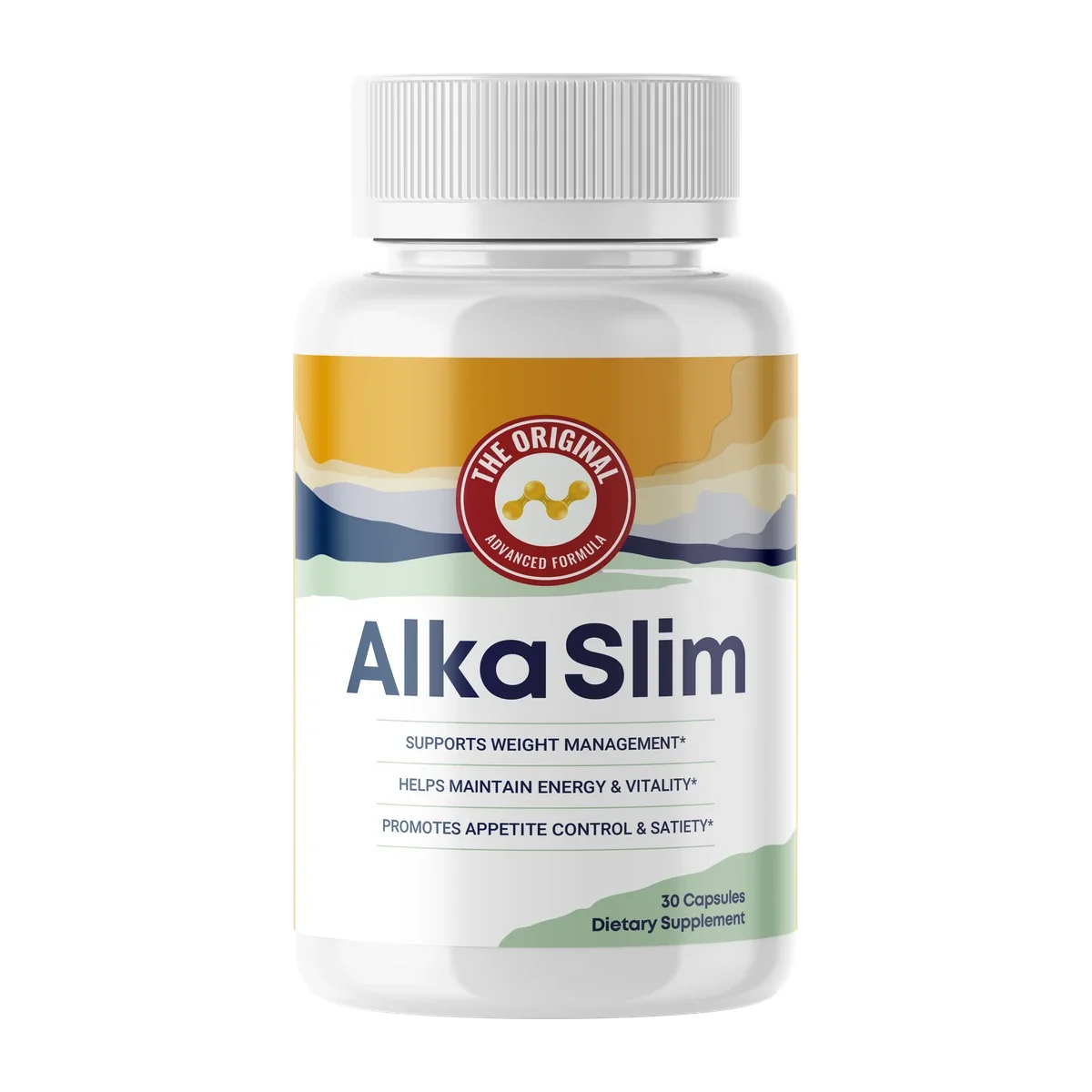
To be straightforward about it: acacia is not in this formula. AlkaSlim names four actives, and its fibre component is konjac glucomannan alongside baobab fruit fibre, with L-arabinose and spermidine making up the rest. We cover acacia here because it is the fibre most often recommended to people whose digestion reacts badly to everything else, and because the comparison is the fastest way to understand what a viscous fibre and a fermentable fibre are each for.
The audit point applies to both. AlkaSlim publishes no Supplement Facts panel on its website and no milligram figure for any of its four ingredients, so the gram question that this whole article turns on cannot be answered before the bottle arrives. That is the single most useful thing to know about it, whether you are comparing fibre products or working out where to buy weight loss supplements safely in the first place. The panel is legally required on the container, so check it on day one and use the guarantee window if the numbers do not hold up.
Frequently asked questions
Why is acacia fiber gentler than inulin?
Because it ferments more slowly and further along the colon. Inulin and other fructans are broken down quickly near the start of the large intestine, so the gas they produce arrives in a short burst. Acacia gum is fermented gradually, which spreads the same process over a longer stretch and tends to produce less bloating at the same amount.
How much acacia fiber do studies use?
Most human research sits in the region of 10 to 30 grams a day, taken as a powder stirred into liquid. Tolerance work suggests many people handle amounts at the upper end of that range without much complaint, but there is no single agreed serving and the useful amount depends on what the rest of your diet already provides.
Is acacia fiber the same as gum arabic?
Yes. Acacia fiber, acacia gum and gum arabic all refer to the dried exudate of Acacia senegal or Acacia seyal trees. The food industry has used it as an emulsifier and stabiliser for decades under the additive number E414, which is why its safety record is unusually well documented for a supplement ingredient.
Can acacia fiber help with appetite the way glucomannan does?
Not to the same degree. Acacia gum dissolves into a low viscosity solution rather than a thick gel, so it does not fill the stomach or slow gastric emptying the way a highly viscous fiber does. Its case rests on fermentation and tolerance rather than on mechanical fullness.
Scientific references
- PubMed — indexed human research on gum arabic, prebiotic effect and tolerance
- Harvard T.H. Chan School of Public Health — Fiber: soluble, insoluble and fermentable
- Mayo Clinic — High-fiber foods and daily fibre targets
- NIH National Institute of Diabetes and Digestive and Kidney Diseases — Digestive health information
- NIH Office of Dietary Supplements — ingredient fact sheets and the amounts used in research
See the current supply options
Supply sizes, shipping terms and the guarantee window are set by the manufacturer and change without notice. The official store is the only place they are current.
Go to the Official Store