AlkaSlim vs Prescription Weight Loss Pills: An Honest Comparison
If you have typed "AlkaSlim vs prescription weight loss pills" into a search bar, you are asking a fair and slightly loaded question, and you deserve a straight answer rather than a sales pitch. Prescription weight loss pills and a natural fiber supplement are not two versions of the same thing. One is a medicine, written by a doctor and studied in large trials; the other is a dietary supplement you buy without a prescription. This article compares them honestly, sets realistic expectations for both, and explains where AlkaSlim genuinely fits.
We are an independent affiliate publisher, not a pharmacy and not the manufacturer. That means we have no reason to talk you out of a medication your doctor recommends, and no reason to pretend a supplement does something it cannot. What follows is the comparison we would want a friend to read before spending money on either.
Quick Answer: Is AlkaSlim as good as prescription weight loss pills?
Not in effect size. Prescription weight loss pills like semaglutide average fourteen to seventeen percent body-weight loss in trials, backed by a doctor's oversight. AlkaSlim is a natural, fiber-based supplement offering modest appetite and routine support with a lower-risk, guarantee-backed trial. It is a lifestyle aid meant to sit beside diet and movement, not a drug substitute.
- What prescriptions do: larger, trial-backed weight loss under medical supervision, with side effects and ongoing cost.
- What AlkaSlim does: modest fiber-based appetite and routine support, no prescription, and a money-back guarantee window.
- The honest frame: complementary lifestyle support, not a replacement for a prescribed medicine.
What "prescription weight loss pills" actually means in 2026
The phrase covers more ground than most people realise, so it helps to separate the categories before comparing anything. The headline group today is the GLP-1 receptor agonists, injectable and now oral medicines such as semaglutide and tirzepatide, which work by mimicking a gut hormone that slows stomach emptying and reduces appetite. These are the medicines behind the numbers you see in the news. Then there are older oral options: phentermine, a short-term appetite suppressant; orlistat, which blocks a portion of dietary fat from being absorbed; and combination pills that pair an appetite agent with another active.
What every one of them shares is the thing that defines the category: a clinician has to prescribe it. That gatekeeping is not bureaucracy for its own sake. It exists because these medicines are powerful enough to move body weight by double-digit percentages, and powerful enough to interact with your other prescriptions, your kidneys, your thyroid and your medical history. A doctor writing the prescription is also the person who screens for the reasons you should not take it.
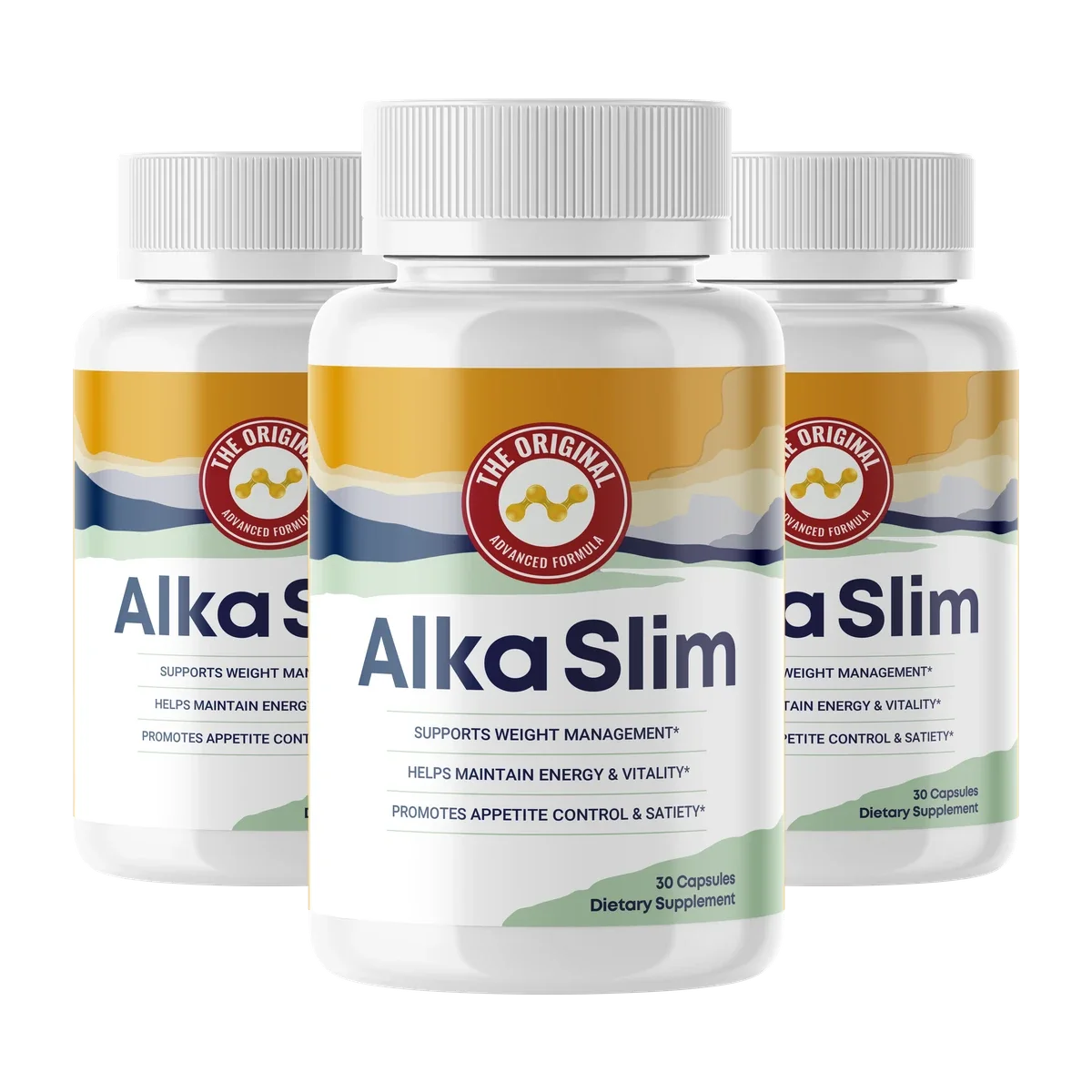
AlkaSlim is not in that group and does not pretend to be. It is a dietary supplement built around fiber and a small set of plant-derived actives, sold directly to the public without a prescription. Under United States law it cannot be marketed to diagnose, treat, cure or prevent any disease, and nothing in this comparison should be read as suggesting it does. Keeping that legal and practical line clear is the whole point of an honest comparison.
The numbers prescription weight loss pills actually deliver
Here is where honesty means giving the medications their due. In the large trials that led to their approval, GLP-1 medicines produced average weight loss in the region of fourteen to seventeen percent of body weight over roughly a year to eighteen months, with the newer dual-action agents reaching higher still in some studies. For a person weighing two hundred pounds, an average in that range is a genuinely meaningful change, and it is far beyond what any fiber supplement has ever demonstrated in a comparable study.
The older medicines are more modest but still measurable. Orlistat trials have generally shown a few percent more weight loss than placebo when paired with a reduced-calorie diet; phentermine works over short courses. None of this is a supplement-level effect, and it would be misleading to imply that a capsule you buy online competes with a medicine studied in thousands of patients.
So why does anyone choose anything else? Because effect size is only one column in the ledger. The same medicines carry nausea, vomiting, constipation and, less commonly, more serious effects; they cost a great deal, often hundreds of dollars a month without insurance coverage; they require ongoing medical supervision; and the weight tends to return once they are stopped, because they manage appetite rather than rebuild habits. Those are not reasons to avoid them. They are the reasons the decision belongs to you and a doctor together, weighing the whole ledger and not just the headline percentage.
Prefer to start with a lower-risk, guarantee-backed trial?
If a prescription is not the right first step for you right now, a natural fiber-based supplement is the lower-commitment place many people begin. Supply options, shipping terms and the guarantee window are all set by the manufacturer and only current at the official store.
See the Official AlkaSlim StoreWhere AlkaSlim actually fits
AlkaSlim's case is not that it out-performs a drug. Its case is that it does a smaller, quieter job with far less to worry about. The formula leans on fiber, and fiber's honest contribution to weight management is well understood: a viscous fiber can add a sense of fullness before and during a meal, which for some people takes the edge off portion size and between-meal snacking. It is a nudge, not a lever. If you want the mechanism explained properly, our deep dive on how glucomannan and konjac fiber create fullness walks through the arithmetic without overselling it.
That framing matters because it sets an expectation you can actually meet. Nobody should approach a fiber supplement hoping to replicate a fourteen-percent trial result. The realistic hope is a modest support that makes a calorie-aware diet and regular movement a little easier to stick to, over months rather than weeks. Sold that way, AlkaSlim is not competing with semaglutide at all. It is competing with doing nothing, or with the drawer full of half-finished supplements most people already own.
There is also the access question, and for a lot of readers it is the deciding one. A supplement needs no appointment, no prescription, no pharmacy and no insurance battle. You can start this week. Paired with a money-back guarantee window, that lowers the cost of trying to something close to the price of finding out whether it helps you personally. That is a legitimate place to begin, provided you begin with the right expectations rather than borrowed ones from a drug trial.

Three myths worth clearing up
Myth one: "natural" means it works the same, just safer. This is the most expensive misunderstanding in the whole category. Natural and prescription are not the mild and strong versions of one product. A fiber supplement and a GLP-1 medicine work by different mechanisms and produce different sizes of effect. "Natural" describes the source of an ingredient, not the scale of its results, and treating a supplement as a gentler drug sets you up to be disappointed by something that was never going to match a medicine.
Myth two: "if it isn't a drug, it does nothing." The opposite error, and just as wrong. Dietary fiber has real, measured effects on satiety and digestion; it is simply that those effects are modest and depend on getting an adequate amount consistently. The reason so many people conclude supplements "do nothing" is that they took too little, took it inconsistently, or expected a drug-sized outcome. A small effect used well beats a large effect abandoned in week two.
Myth three: the choice is either-or. For many people it is not. Diet and activity remain the foundation under both a medicine and a supplement, and the two products are not mutually exclusive in principle. The genuine constraint is medical, not philosophical, and it is covered below. What you should not do is frame this as picking a team. If you are weighing over-the-counter options first, our rundown of the main over-the-counter weight loss pills compared is a useful next stop before you commit to anything.
AlkaSlim vs prescription weight loss pills, side by side
| Factor | Prescription weight loss pills | AlkaSlim (fiber supplement) |
|---|---|---|
| Typical documented weight change | Roughly 14% to 17% with GLP-1s; a few percent with older oral agents | Modest, individual, no drug-scale trial data |
| Access | Prescription and clinical assessment required | Bought directly, no prescription |
| Medical oversight | Built in, and necessary | Your own responsibility; ask a clinician |
| Common side effects | Nausea, vomiting, constipation; rarer serious effects | Mainly gas or bloating while adjusting to fiber |
| Cost pattern | Often high and ongoing, insurance-dependent | Lower, one-off supply purchases |
| If you stop | Appetite and weight often rebound | You lose a modest support, not a strong effect |
| Trial risk | Medical commitment | Money-back guarantee window |
Read the table as a whole rather than fixating on the first row. The medicine wins decisively on effect size and evidence. The supplement wins on access, cost, side-effect profile and how cheaply you can find out whether it suits you. Different people weight those columns differently, and there is no universally correct answer, only the one that fits your situation.
Can you use both together?
Sometimes, but this is precisely the question to put to a prescriber rather than to a website. The practical concern with any fiber supplement is timing: viscous fiber can slow the absorption of some medicines when the two are taken at the same moment, which is why fiber is generally spaced away from other oral drugs. Anyone already on a GLP-1 or another weight medication should clear a new supplement with the clinician managing their care before adding it, full stop. Never adjust, add to or stop a prescribed medicine on the strength of something you read here.
Used sensibly and with a doctor's blessing, a fiber supplement is the kind of low-drama lifestyle habit that can sit alongside a broader plan. But "alongside" is doing real work in that sentence. It is a companion to medical care and healthy habits, not a substitute for either, and the honest version of this article will not blur that line to make a sale.
How to actually decide
Start with the question underneath the question. If a doctor has told you that your weight is affecting your health and that medication is appropriate, a supplement is not the equivalent path, and this comparison should not talk you out of clinical care. If, on the other hand, you are earlier in the journey, do not meet the thresholds for medication, or simply want to make an honest attempt at diet and movement easier to sustain, a fiber supplement with a guarantee is a low-risk place to begin.
Whatever you choose, buy from a source you can verify and read the label before you commit. AlkaSlim publishes no Supplement Facts panel on its website and no milligram figure for its ingredients, which means the exact amount of fiber per serving cannot be confirmed until the bottle is in your hands. That is a real caveat, and the guarantee window is the tool that offsets it: check the panel on day one and use the refund window if the numbers do not hold up. If you are weighing sellers, our guide to buying AlkaSlim from the official store safely covers what to look for. And if you would rather compare the wider field first, the best weight loss pills of 2026 breakdown lays out where each option sits.
Frequently asked questions
Is AlkaSlim as effective as prescription weight loss pills?
No, and it would be dishonest to claim otherwise. Prescription GLP-1 medicines such as semaglutide have produced average weight loss in the region of fourteen to seventeen percent of body weight in clinical trials. AlkaSlim is a fiber-based dietary supplement offering modest appetite and routine support, and it has no trial data of that kind behind it. The two sit in different categories.
When should I consider prescription weight loss medication?
That is a conversation for a doctor, not a website. In general, prescription weight loss pills are considered when body mass index crosses a clinical threshold, often alongside a related health condition, and when changes to diet and activity alone have not been enough. A qualified clinician weighs your history, your other medicines and the known side effects before writing anything.
What are the trade-offs of natural vs prescription pills?
Prescription options offer larger, better-documented weight loss but come with a prescription requirement, nausea and other side effects, ongoing cost and the likelihood of regain if stopped. A natural supplement like AlkaSlim offers smaller, less certain support with a lower side-effect profile, no prescription and a money-back guarantee window. You are trading effect size for access, cost and risk.
Can I use AlkaSlim alongside a prescription?
Possibly, but only your prescriber can tell you. Fiber can slow the absorption of some medicines when taken at the same time, so timing and spacing matter, and anyone on a GLP-1 or another weight medication should clear any new supplement with the clinician managing it first. Never add or stop a prescribed medicine on the strength of a supplement.
Related reading
Scientific references
- PubMed — indexed clinical trials of GLP-1 medicines and body-weight change
- NIH Research Matters — summaries of weight management medication research
- U.S. FDA — approved weight-management drug safety information for patients and providers
- Harvard T.H. Chan School of Public Health — dietary fiber, satiety and appetite
- NIH NIDDK — weight management information and treatment options
Start the lower-risk option today
If a natural, fiber-based trial is the right first step for you, the official store is the only place supply sizes, shipping terms and the guarantee window are current. Check the label the day it arrives.
Go to the Official Store